
When someone is experiencing difficulty with focus, memory, processing speed, or mental stamina, it can be helpful to gather objective information about brain activity. WAVi records electrical activity from the scalp and measures the brain’s responses during specific tasks. We review those results alongside the person’s history, symptoms, and clinical evaluation.
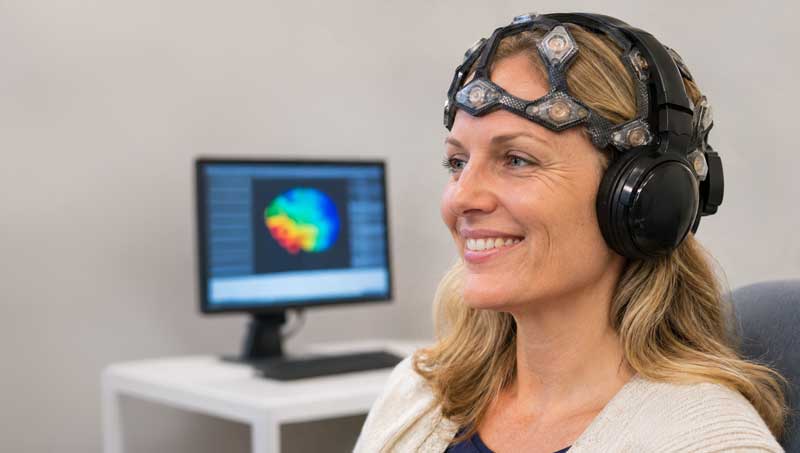
What happens during a WAVi assessment?
A headset records brain activity while you rest with your eyes open and closed and complete guided tasks. Depending on the protocol, these may include an auditory P300 task, Flanker, and Trail Making. The results are organized into a report for professional review.
What do the results show?
WAVi includes several types of measurements:
- EEG activity records patterns of electrical activity under different resting conditions.
- P300 response measures the timing and size of the brain’s response to an occasional target sound.
- Flanker and Trail Making measure performance on tasks involving attention, visual processing, and response speed.
These measurements provide a snapshot of performance during the assessment. They can also establish a baseline for comparison over time when follow-up testing is appropriate.
How we use the results
We interpret the WAVi report in the context of the whole person. Symptoms, health history, sleep, medications, and recording quality can all affect how results are understood. The findings may help guide the conversation about what to evaluate or monitor next.
WAVi is one part of a broader clinical evaluation. It does not replace a medical diagnosis or other testing when those are needed.
Have questions about WAVi? Contact our office to discuss your concerns and whether an assessment may be appropriate for you.